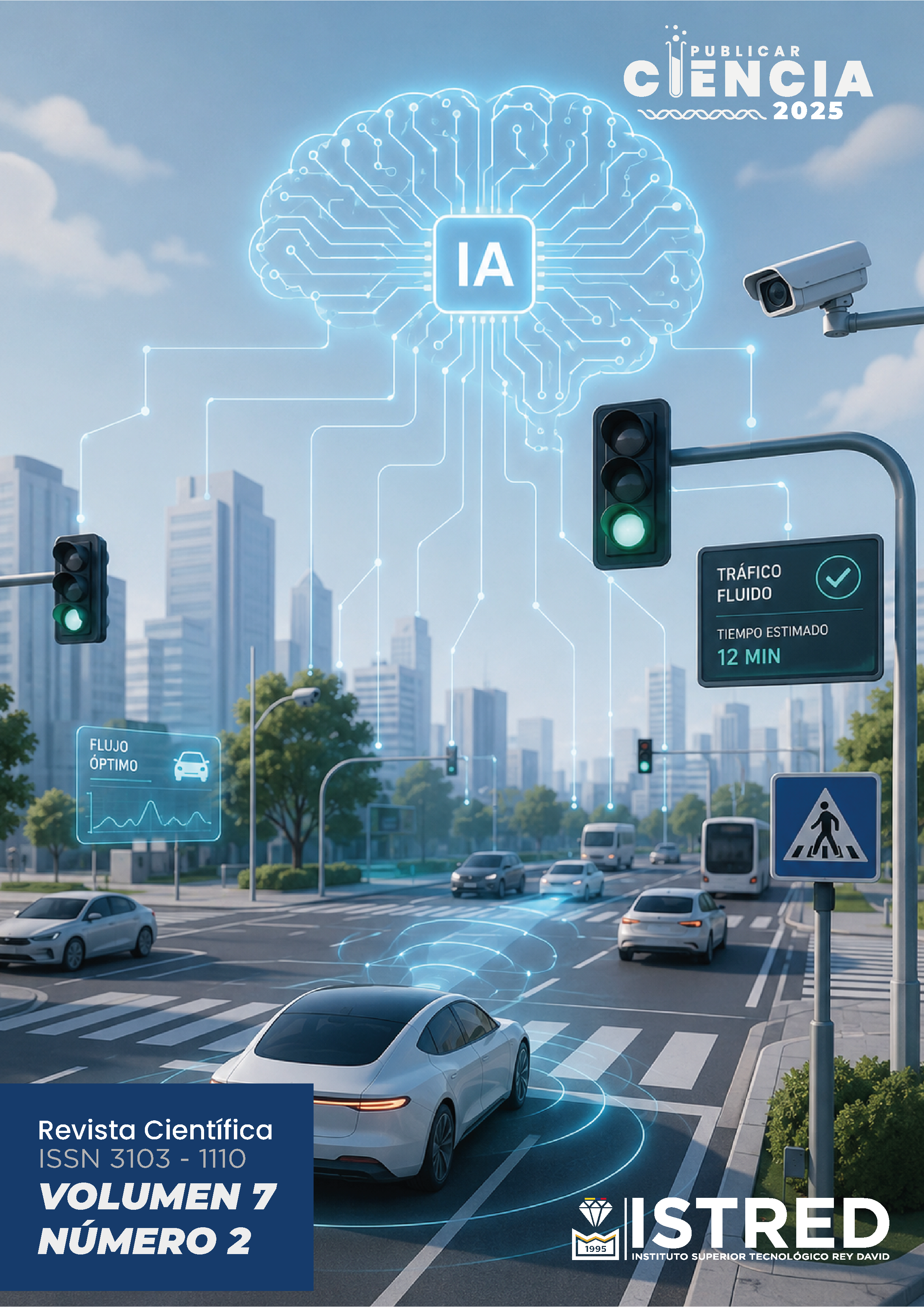
Impact of the SIAT 3000 system on the operational improvement of the Daule land terminal.
DOI:
https://doi.org/10.67169/publicarciencia.v7i2.45Keywords:
SIAT3000 System, Operational management, Bus terminal, Information systemsAbstract
Efficient management of land transport terminal operations requires technological tools that enable the organization of information and the improvement of administrative processes linked to the control of mobility activities. This research analyzed the impact of the SIAT3000 system on the operational improvement of the Daule Land Transport Terminal, aiming to evaluate its contribution to organizing administrative processes and controlling passenger transport operations. The study employed a quantitative approach with a descriptive scope and a non-experimental, cross-sectional design. The study population consisted of the administrative and operational staff involved in terminal management. Data collection involved administering structured surveys to staff members who use the system, alongside a review of administrative records generated by the technological platform. The data obtained were processed using descriptive statistical techniques—specifically frequencies and percentages—to analyze user perceptions regarding the system's performance. The results show that the majority of the staff possess an adequate level of knowledge about the SIAT3000 system and believe that its use facilitates the organization of the terminal's operational activities. The technological platform contributes to recording information related to transport unit monitoring, scheduling departure frequencies, and managing the terminal's administrative processes.
Downloads
References
Arias, F. G. (2016). El proyecto de investigación: Introducción a la metodología científica (7.ª ed.). Editorial Episteme.
Bernal, C. A. (2016). Metodología de la investigación: Administración, economía, humanidades y ciencias sociales (4.ª ed.). Pearson Educación.
Chiavenato, I. (2019). Introducción a la teoría general de la administración (10.ª ed.). McGraw-Hill.
Código Orgánico de Organización Territorial, Autonomía y Descentralización. (2010). Registro Oficial Suplemento 303. https://www.defensa.gob.ec/wp-content/uploads/downloads/2016/01/dic15_CODIGO-ORGANICO-DE-ORGANIZACION-TERRITORIAL-COOTAD.pdf
Demoraes, F., Bondoux, F., Souris, M., & Núñez, H. (2004). Innovaciones tecnológicas aplicadas al transporte colectivo en Quito: optimización en la evaluación de la demanda con GPS y SIG. Bulletin de l'Institut Français d'Études Andines, 33(1), 193–212. https://www.redalyc.org/pdf/126/12633107.pdf
Dennis, C. A. (2018). A survey of cybersecurity risks in public transportation systems. Journal of Transportation Security, 11(2), 89–104.
Fuentelsaz, C., Icart, M., & Pulpón, A. (2006). Elaboración y presentación de un proyecto de investigación y una tesina. Publicacions i Edicions de la Universitat de Barcelona.
Gómez, F. (2021). Diagnóstico de transporte inteligente para la ciudad de Guayaquil [Tesis de pregrado, Universidad Internacional del Ecuador]. https://repositorio.uide.edu.ec/bitstream/37000/4412/1/T-UIDE-0112.pdf
Guzmán, L., & Chancay, L. (2023). Estudio bibliográfico de sistemas de transporte inteligente orientado a los buses urbanos de la ciudad Portoviejo. Polo del Conocimiento, 8(5), 1200–1218. https://doi.org/10.23857/pc.v8i5
Heilig, L. (2019). Digital transformation in transportation logistics: A literature review. Information Systems and e-Business Management, 17(3), 421–452.
Heilig, L., Stahlbock, R., & Voß, S. (2019). From digitalization to data-driven decision making in container terminals. Cornell University Library. https://doi.org/10.48550/arXiv.1904.13251
Hernández, A. (2003). Los sistemas de información: Evolución y desarrollo. Universidad de Zaragoza. https://dialnet.unirioja.es/descarga/articulo/793097.pdf
Hernández-Sampieri, R., Fernández, C., & Baptista, P. (2018). Metodología de la investigación (6.ª ed.). McGraw-Hill Education.
Laudon, K., & Laudon, J. (2020). Sistemas de información gerencial (16.ª ed.). Pearson.
León, M. B., & Aldaz, S. (2025). Automatización del control de salidas de vehículos y pasajeros y su efecto en la transparencia financiera en el terminal terrestre de Riobamba. Religación, 10(47), 1–19. https://doi.org/10.46652/rgn.v10i47.1526
Ley Orgánica de Protección de Datos Personales. (2021). Registro Oficial Suplemento 459. https://www.finanzaspopulares.gob.ec/wp-content/uploads/2021/07/ley_organica_de_proteccion_de_datos_personales.pdf
Ley Orgánica de Transporte Terrestre, Tránsito y Seguridad Vial. (2008). Registro Oficial Suplemento 398. https://www.mit.gob.ec/wp-content/uploads/downloads/2021/08/LOTAIP_6_Ley-Organica-de-Transporte-Terrestre-Transito-y-Seguridad-Vial-2021.pdf
Ochoa, L. (2016). Arquitectura de un sistema inteligente de transporte (ITS) que permite mejorar la operación y seguridad del transporte terrestre del Ecuador [Tesis de pregrado, Universidad de Guayaquil]. http://repositorio.ug.edu.ec/handle/redug/10434
Tamayo, M., & Tamayo, M. (2017). El proceso de la investigación científica (5.ª ed.). Limusa.
Downloads
Published
Issue
Section
License
Copyright (c) 2025 John Viccente Gavilanes Cardenas, Jonathan Alexander Yumi Taday (Autor/a)

This work is licensed under a Creative Commons Attribution-NonCommercial-ShareAlike 4.0 International License.